Free Shipping Isn't Free — Here's What Retailers Don't Want You to Know
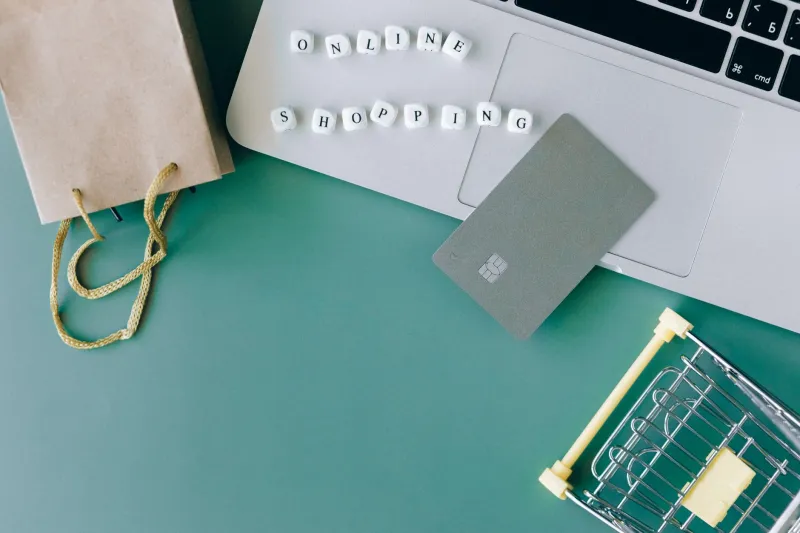
There's something almost magical about seeing the words free shipping at checkout. Your shoulders drop, you exhale a little, and suddenly the purchase feels justified. But here's the thing — that warm, fuzzy feeling? It's engineered. Deliberately, precisely, and very profitably engineered.
At ShopFreeda, we're all about helping you find deals that are genuinely worth celebrating. Which means we also have to be honest when a "deal" is more theater than savings. Free shipping is one of the biggest culprits in modern retail psychology, and understanding how it works is the first step to actually keeping more money in your pocket.
Why Your Brain Treats Zero Differently
Behavioral economist Dan Ariely laid out the concept beautifully in his book Predictably Irrational: zero isn't just a number. It's an emotional trigger. When something costs nothing, our brains don't evaluate it the same way we evaluate a price of even one cent. The perceived risk evaporates. The hesitation dissolves.
Retailers figured this out long before behavioral economics had a name. When Amazon introduced free shipping through Prime, it didn't just boost sales — it fundamentally rewired how millions of Americans shop online. Paying for shipping started to feel wrong, almost punitive, even though it's the natural cost of getting a physical object delivered to your door.
Today, that rewiring is so complete that studies consistently show shoppers will choose a free shipping offer over a discount of equal or greater monetary value. Offered a choice between $10 off and free shipping on a $50 order? Most people pick free shipping — even though the $10 discount is objectively better.
The Minimum Threshold Trap
You've been there. Your cart totals $43.17, and the site tells you that you're just $6.83 away from free shipping. So you browse. You find a candle, a phone case, some vitamins you probably don't need. You add $8 worth of stuff to "save" on shipping.
Congratulations — you just spent $8 to avoid a $5.99 shipping fee.
This is the minimum threshold strategy, and it is one of the most effective upsell tools in e-commerce history. A study published in the Journal of Marketing Research found that free shipping thresholds reliably increase average order values by 30% or more. The retailer wins every single time, because that extra $8 you spent almost certainly has a profit margin higher than the shipping cost they're absorbing.
The math isn't complicated once you see it. But in the moment, with that progress bar taunting you, it feels like you're the one winning.
Where Does the Shipping Cost Actually Go?
Here's the uncomfortable truth: shipping is rarely actually free. The cost doesn't vanish — it gets redistributed. Retailers bake it into product prices, absorb it as a customer acquisition cost, or offset it through membership fees (hi, Amazon Prime at $139 a year).
In many cases, a retailer offering free shipping has simply priced their products $3–$8 higher than a competitor who charges for shipping separately. When you compare total costs — product plus delivery — the "free shipping" store is sometimes more expensive.
This is especially common in categories like home goods, apparel, and electronics accessories. The next time you're shopping for something specific, try this: check the total price including shipping at two or three retailers. You might be surprised which one actually comes out cheaper.
Membership Models and the Sunk Cost Spiral
Paid shipping memberships like Amazon Prime, Walmart+, or Target Circle 365 add another psychological layer. Once you've paid that annual fee, you feel compelled to use it — even when it's not the best option. Economists call this the sunk cost fallacy: money already spent influences future decisions, even when it logically shouldn't.
If you're paying $139 a year for Prime, you might unconsciously default to Amazon for purchases where another retailer is actually cheaper, just to feel like you're "getting your money's worth." The membership fee itself becomes a loyalty mechanism that benefits the retailer far more than it benefits you.
That said — if you genuinely shop frequently and would otherwise pay for shipping regularly, these memberships can absolutely pay off. The key is doing the math honestly rather than emotionally.
How to Tell When Free Shipping Is Actually a Win
We're not here to tell you free shipping is always a scam. Sometimes it genuinely is the best deal. Here's a quick framework for evaluating it:
Compare total costs. Always add shipping to the product price before comparing across retailers. A $29 item with $5 shipping may beat a $32 item with "free" shipping.
Check price history. Tools like CamelCamelCamel (for Amazon) or browser extensions like Honey and Capital One Shopping show you historical pricing. If the product was $10 cheaper last month, the free shipping isn't saving you anything.
Question the threshold math. If you're adding items to hit a free shipping minimum, calculate whether the extra spend exceeds the shipping cost. More often than not, it does.
Factor in return friction. Some retailers offer free shipping but charge for returns. That "free" delivery can cost you if the item doesn't work out.
Audit your memberships annually. Add up what you actually spent through each membership service, subtract the fee, and see if you came out ahead. If not, cancel it.
Shop Smarter, Not Just Cheaper
At ShopFreeda, our whole thing is finding savings that are real — not just savings that feel real. Free shipping is one of retail's most powerful emotional levers, and now that you know how it works, you're in a much better position to decide when it's worth celebrating and when it's just clever packaging.
The best deal isn't always the one with the biggest banner. Sometimes it's the one where you quietly paid $4.99 for shipping and saved $15 on the product itself. Boring? Sure. But your bank account doesn't care about excitement — it cares about math.
Next time that free shipping offer pops up, give yourself three seconds to run the numbers. That tiny pause might be worth more than the offer itself.